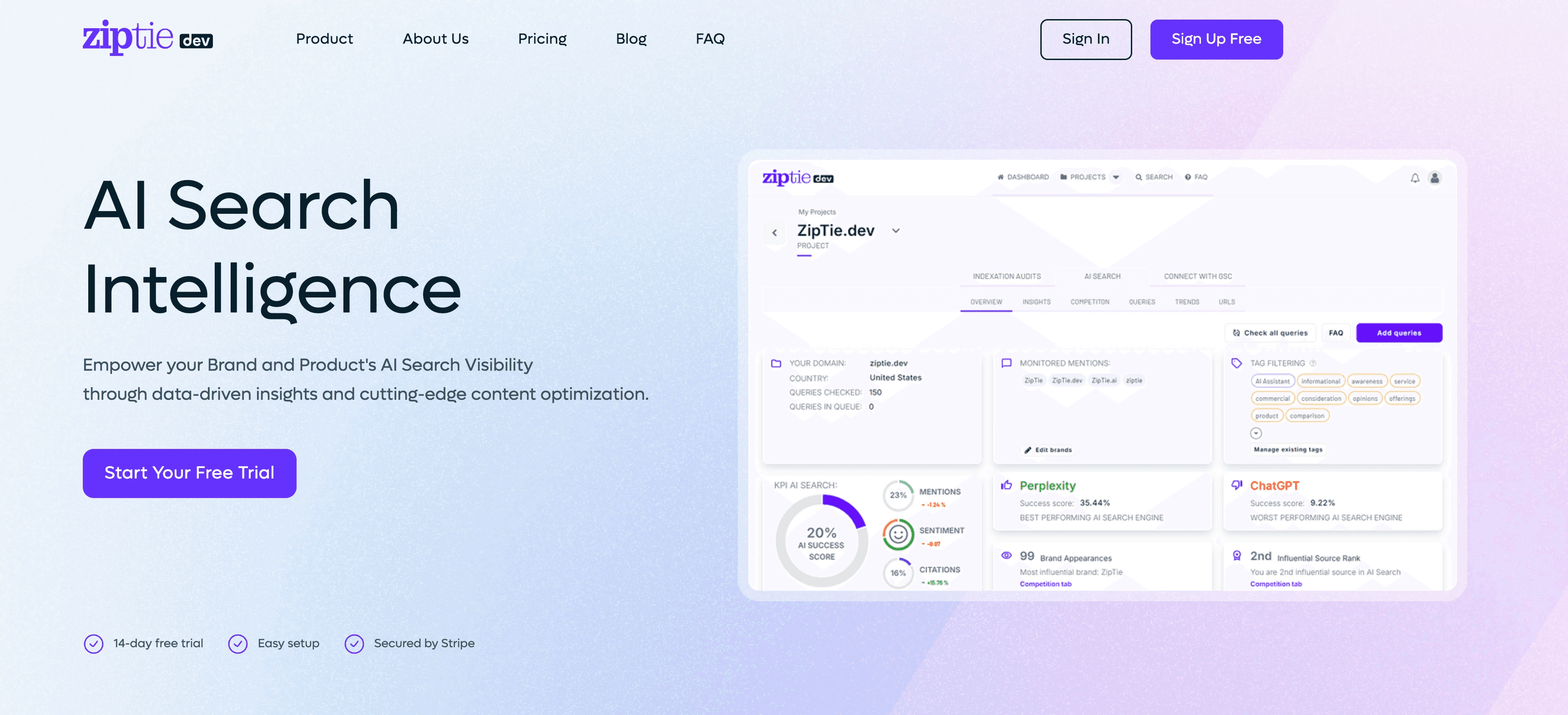
ZipTie.AI
ZipTie.ai is an enterprise tool for AI Search. I architected the entire user ecosystem from scratch, replacing an inflexible "Frankenstein" legacy app with a modern, workspace-based SaaS. This case study breaks down how I solved complex synchronization issues and scaled the frontend to manage massive AI search datasets.
Prototype
Case Study
01. Project Overview
Product: ZipTie.ai is an enterprise-grade SaaS platform dedicated to Generative Engine Optimization (GEO). While traditional SEO focuses on search engines, ZipTie.ai monitors brand visibility across AI Overviews and major LLMs, including ChatGPT, Perplexity.
My Role: No-code Developer (Architecture & Frontend).
Focus: I was responsible for the entire user-facing ecosystem in Bubble.io, including the UI/UX, complex API orchestrations, and the subscription engine.
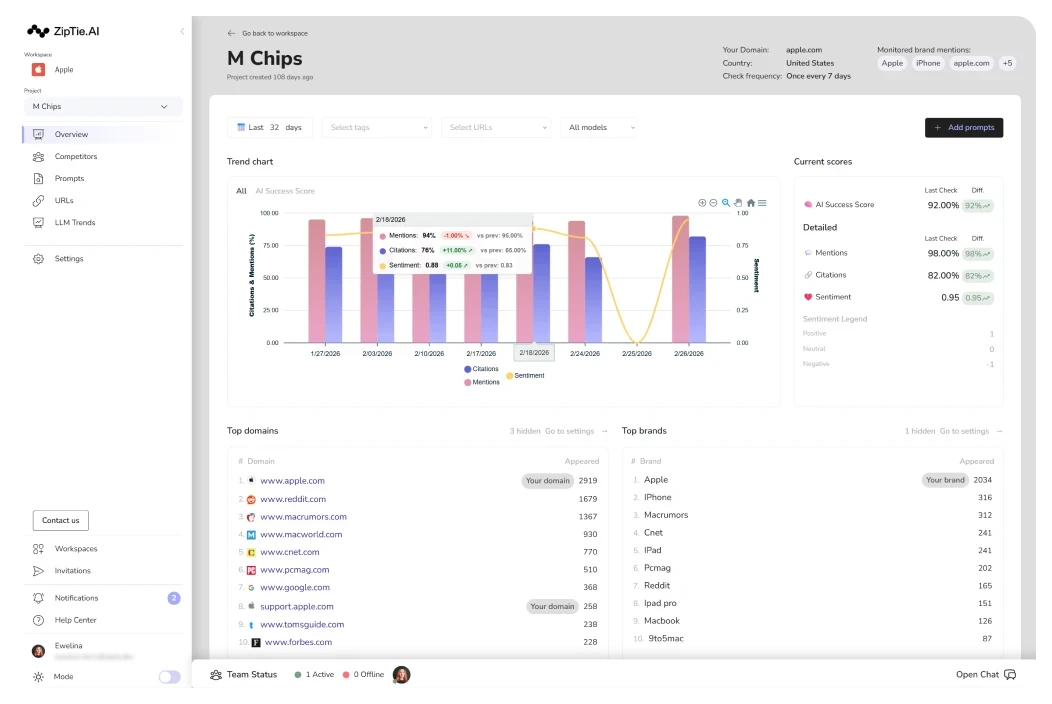
02. The Architecture: Hybrid Bubble + Python System
Unlike standard no-code projects, ZipTie.ai utilizes a sophisticated hybrid backend to handle heavy data processing:
Bubble.io (My Ownership): Manages the user database, authentication, Stripe subscription logic, and the high-fidelity frontend.
Python Backend (Dev): Handles heavy-duty tasks such as web crawling, LLM data generation, and technical indexing.
The Bridge: I designed the integration layer. Technical data-including workspace details, project configurations, and invited users-resides on the Python side. My responsibility was to fetch and synchronize this data dynamically through complex API workflows.
Stripe API Integration: Dynamic Checkout Session
This snippet shows the JSON configuration in the API Connector for Stripe integration. I set up a POST call to the https://api.stripe.com/v1/checkout/sessions endpoint to generate checkout sessions dynamically.
By building the call this way, I enabled the system to create prices and subscription details on-the-fly directly from Bubble. This gives us total flexibility for custom billing models, so we don't have to manually create every single price or product inside the Stripe Dashboard.
03. Engineering Challenges
Working with a high-frequency external backend introduced significant technical hurdles:
The Race Condition Problem: During early development, standard workflows often triggered duplicate API calls or attempted to fetch data before the optional parameters for filtering were fully set in the app state. This happened even when the workflow was technically triggered only once.
Large-Scale Payloads: We frequently handled massive API responses-some reaching up to 1GB in size. This required extremely precise data handling to prevent frontend lag and browser crashes.
The Solution: Action-Based Workflows: I performed a deep architectural refactoring, moving away from "Data-type" calls to Action-based workflows. By ensuring calls only fire after strict "Custom State" validation, I eliminated race conditions and redundant WU consumption.
04. Evolution: From ZipTie.dev to ZipTie.AI
ZipTie.ai was born from the need to move beyond a legacy "Frankenstein" architecture into a clean, production-ready system.
The Legacy (ZipTie.dev): Originally built as a website indexing tool with GSC integration, ZipTie.dev grew rapidly as AI Overviews emerged. My role involved expanding its capabilities into GEO (Generative Engine Optimization) by integrating additional LLMs. However, the legacy structure-limited to a "one user, one subscription" model with no sharing capabilities-made it nearly impossible to implement modern SaaS features.
The Pivot to GEO: As the product focus shifted entirely from traditional SEO to monitoring mentions, citations and sentiment in AI-generated responses (ChatGPT, Perplexity, AI Mode, AI Overview), we reached a breaking point with the old code. We decided to strip away the indexing and GSC modules to build a "Clean Slate" model.
The "Lite" Model Strategy: I architected ZipTie.ai from the ground up to solve the previous structural debt. This new "Lite" model introduced:
True Multi-tenancy: Moving away from single-user accounts to a workspace-based system with project sharing.
Scalable Architecture: A clean foundation designed to eventually support more features
Current Status: The "Lite" model is now production-ready, representing the successful culmination of our efforts to build a modern, scalable GEO monitoring platform.
ZipTie.dev | ZipTie.AI |
|---|---|
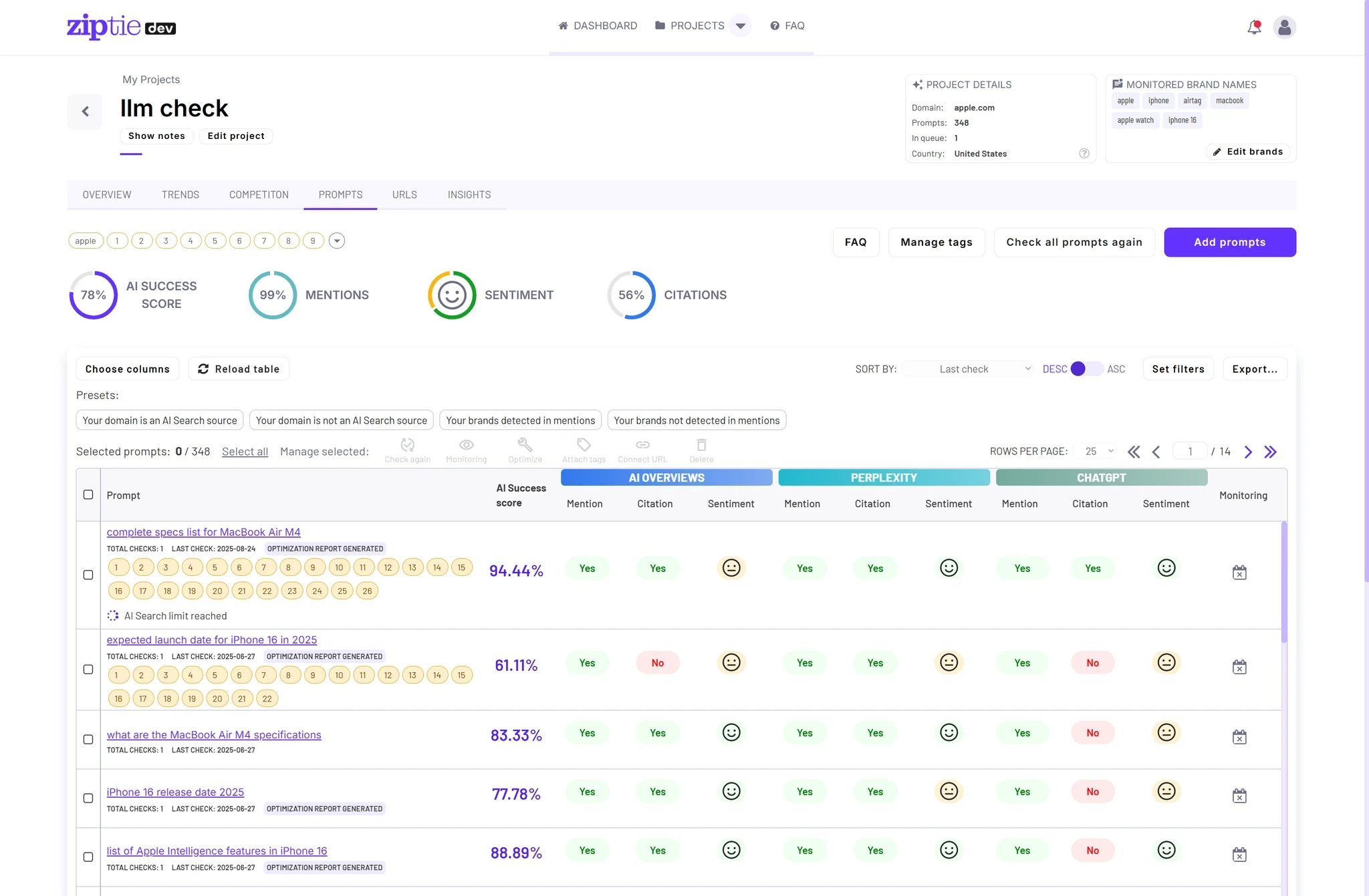 | 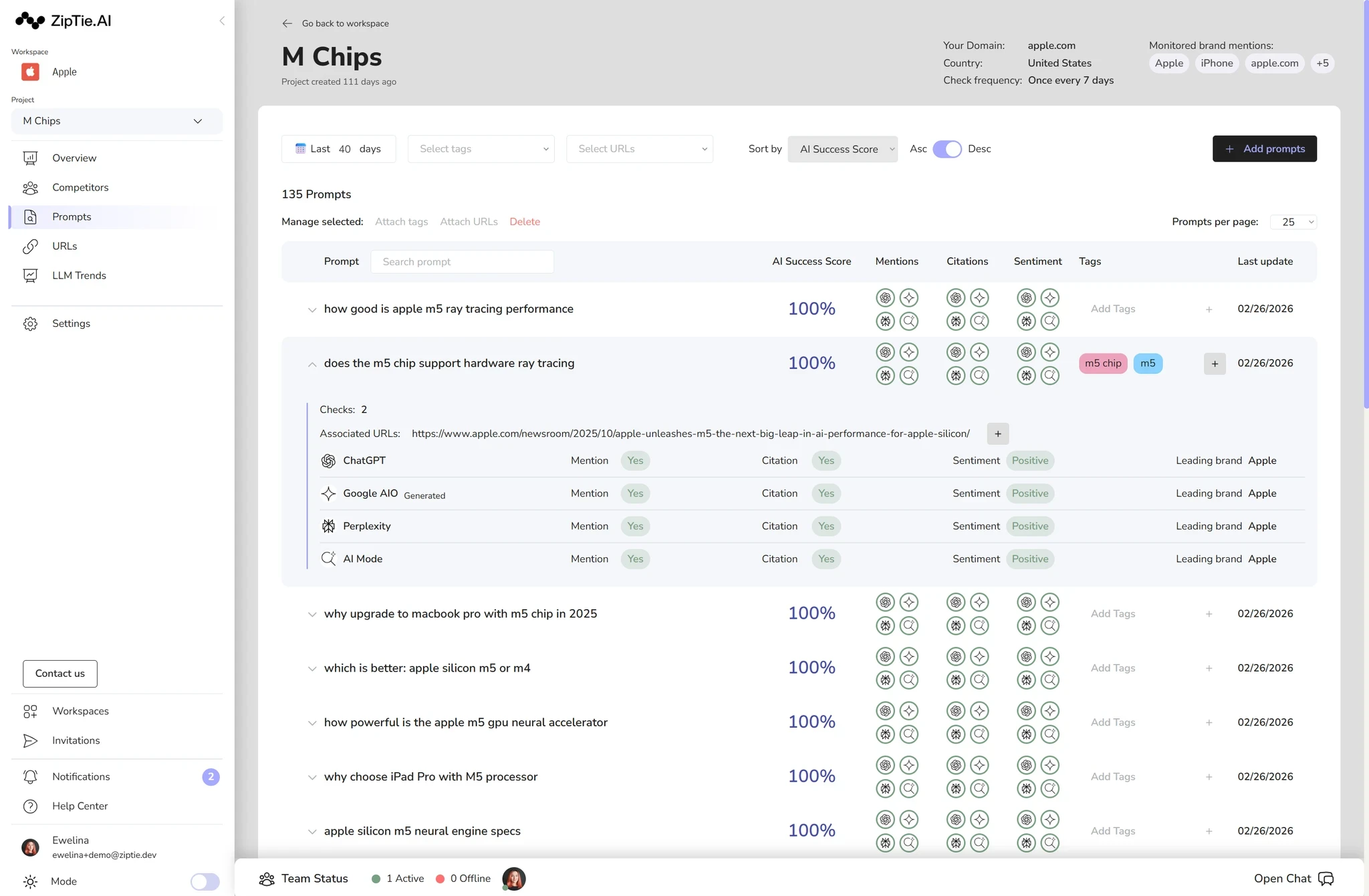 |
05. Tech Stack & Implementation
Engine: Bubble.io (Architecture, User Logic, Stripe Integration).
Data Visualization: Custom ApexCharts (JavaScript) for citations, mentions AI Success Score and sentiment tracking.
Styling: Custom CSS for premium UI components.
Tracking: A custom-built Mixpanel Plugin to monitor specific user behavior.
Clips:
Filtering results: